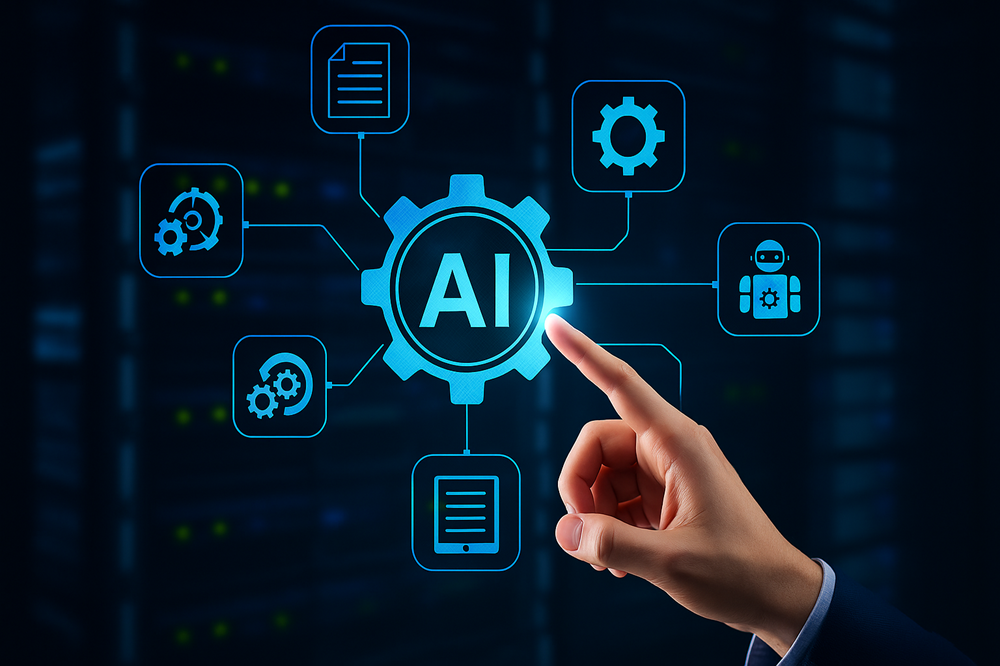
Artificial Intelligence (AI) and Automation are transforming the way businesses operate, helping organizations streamline processes, reduce costs, and improve productivity. From automating repetitive tasks to providing data-driven insights, AI-powered technologies are enabling companies to work smarter and deliver better customer experiences.
As businesses continue to embrace digital transformation, AI and automation have become essential tools for maintaining competitiveness, increasing efficiency, and supporting long-term growth.
What Are AI and Automation?
Artificial Intelligence refers to computer systems that can perform tasks that typically require human intelligence, such as learning, decision-making, problem-solving, and language understanding.
Automation involves using technology to perform repetitive processes with minimal human intervention. When combined with AI, automation becomes more intelligent, allowing systems to adapt, analyze data, and make informed decisions.
Together, AI and automation help businesses optimize workflows, improve accuracy, and enhance operational performance.
Key Benefits of AI & Automation
Increased Productivity
AI-powered tools can handle repetitive and time-consuming tasks, allowing employees to focus on strategic and creative work. This improves overall productivity and operational efficiency.
Reduced Operational Costs
Automating routine processes reduces manual labor requirements, minimizes errors, and lowers operational expenses, helping businesses maximize profitability.
Improved Accuracy
Unlike manual processes, automated systems perform tasks consistently and accurately, reducing the risk of costly mistakes and improving reliability.
Faster Decision-Making
AI can analyze large volumes of data in real time, providing actionable insights that help businesses make informed decisions quickly and confidently.
Enhanced Customer Experience
AI-powered chatbots, virtual assistants, and customer support systems provide faster responses and personalized interactions, improving customer satisfaction.
Applications of AI & Automation
Customer Service Automation
Businesses use AI chatbots and virtual assistants to handle customer inquiries, schedule appointments, and provide support around the clock.
Marketing Automation
AI helps automate email campaigns, audience segmentation, content recommendations, and customer journey management, improving marketing effectiveness.
Data Analytics and Reporting
Organizations leverage AI to analyze business data, identify trends, predict outcomes, and generate reports that support strategic planning.
Workflow Automation
Routine administrative tasks such as invoice processing, document management, approvals, and data entry can be automated to save time and resources.
Sales and Lead Management
AI-powered CRM systems help businesses track leads, predict customer behavior, and automate follow-up activities to improve conversion rates.
How AI Is Transforming Industries
Healthcare
AI assists healthcare providers with diagnostics, patient monitoring, medical imaging analysis, and personalized treatment recommendations.
Finance
Financial institutions use AI for fraud detection, risk assessment, customer service, and automated trading strategies.
Retail and eCommerce
Retailers use AI to personalize shopping experiences, manage inventory, forecast demand, and optimize pricing strategies.
Manufacturing
Automation and AI improve production efficiency, predictive maintenance, quality control, and supply chain management.
Education
AI-powered learning platforms deliver personalized educational experiences and support students through adaptive learning systems.
Implementing AI and Automation Successfully
To maximize the benefits of AI and automation, businesses should:
- Identify repetitive and time-consuming tasks.
- Define clear business objectives.
- Choose scalable technology solutions.
- Integrate AI with existing workflows.
- Train employees to work alongside automated systems.
- Continuously monitor performance and optimize processes.
A strategic implementation approach ensures businesses achieve measurable results while minimizing disruption.
Emerging Trends in AI & Automation
The future of AI and automation continues to evolve rapidly. Key trends include:
- Generative AI for content creation and design.
- Intelligent process automation (IPA).
- AI-powered predictive analytics.
- Advanced conversational AI and virtual assistants.
- Hyperautomation across business operations.
- AI-driven cybersecurity solutions.
- Integration of AI with IoT and smart devices.
These innovations are expected to reshape industries and create new opportunities for businesses worldwide.
Challenges and Considerations
While AI offers significant advantages, businesses should also consider:
- Data privacy and security requirements.
- Ethical AI usage.
- Implementation costs.
- Integration complexity.
- Employee training and adoption.
Addressing these factors early helps ensure successful deployment and long-term value.
Final Thoughts
AI and automation are no longer future technologies—they are essential business tools driving innovation, efficiency, and growth. Organizations that embrace these technologies can streamline operations, improve customer experiences, and gain valuable insights that support smarter decision-making.
As AI capabilities continue to advance, businesses that invest in intelligent automation today will be better positioned to adapt, compete, and thrive in an increasingly digital world.